How AI Search Uses Hotel Reviews to Recommend Stays
You call it good customer feedback; AI retrieval models call it semantic density. While your website says "quiet rooms," the AI checks whether real guests wrote "the street noise was inaudible." If they didn't, the machine assumes you're exaggerating and skips your property.


Conversational search engines (Google AI Overviews, ChatGPT Search, and Perplexity) do not solely rely on website amenity checklists to recommend hotels. Modern Retrieval-Augmented Generation (RAG) pipelines may treat your website as an unverified claim and use Review Semantic Density—the volume, specificity, and sentiment of real guest feedback across Google Reviews, TripAdvisor, and Reddit—as mathematical verification.
- Dense Vectors Over Amenity Lists: Generic bullet points like "High-Speed Internet" or "Soundproof Rooms" carry low token weight. AI engines prioritize long-tail review excerpts containing hard sensory facts (e.g., "measured 180 Mbps down," "whisper-quiet AC below 28 dB") to answer specific traveler prompts without hallucinating.
- The Information Gain Principle: Canned boilerplate replies ("Thank you, we hope to see you soon") are discarded as zero-value tokens. Factual management updates containing verifiable engineering milestones can overwrite negative entity tags (e.g., resolving an
Active Problem: AC Noisevector). - PR & Operations Playbook: Shift post-stay survey workflows from broad ratings to granular functional prompts (Wi-Fi stability, acoustic isolation, bed firmness) and audit community vector signals on Reddit travel forums (
r/FATTravel,r/chubbytravel) to mirror organic discovery phrasing.
Below is the technical RAG breakdown, consensus verification matrix, and operational copywriting framework for hotel marketing and commercial teams.
References: Review official generative search guidelines from Google Search (AI Overviews), Google Structured Data Documentation, and foundational Princeton/Georgia Tech GEO Research.
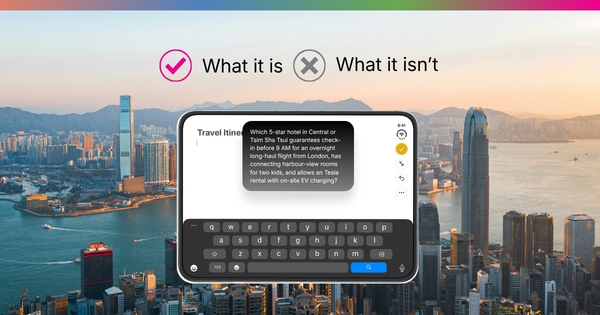
When a traveler asks ChatGPT or Perplexity:
"Find me a boutique hotel in downtown Chicago with reliable high-speed Wi-Fi, quiet rooms for Zoom calls, and a firm mattress,"
Rather than just scanning your homepage meta tags or checking whether your amenities page lists 'High-Speed Internet' and 'Luxury Bedding,' the AI model evaluates Semantic Density—the volume, specificity, and authenticity of real guest feedback that confirms those exact experiential conditions."
As foundational research from the Princeton & IIT Delhi Generative Engine Optimization (GEO) study demonstrated, models prioritize authoritative, quotation-backed, and statistically concrete data points when formulating citations. For hotels, unstructured review platforms—Google Reviews, TripAdvisor, and dedicated travel communities on Reddit (r/FATTravel, r/chubbytravel)—serve as the primary vector corpus.
1. The Retrieval Pipeline: How RAG Chunks Hotel Sentiment
Modern search engines—including Google AI Overviews and Perplexity—rely on Retrieval-Augmented Generation (RAG). When answering granular travel queries, the architecture follows three primary stages:
- Tokenization and Chunking: The engine pulls recent review corpora and splits them into distinct experiential chunks.
- Dense Vector Mapping: A review stating, "I took client calls all morning from the corner room; the acoustics were dead silent and the Wi-Fi never dropped below 150 Mbps," maps closely to the vector embeddings of
reliable workspace,business travel friendly, andsoundproof rooms. - Sentiment Validation: General claims ("Great stay!") carry low semantic mass and are discarded. Highly specific, descriptive sentences carry high informational density and become citation anchors.
2. The Fall of the Amenity Checklist
For twenty years, hotel SEO operated on structured checkboxes: OTA filters, schema tags, and website feature lists. While machine-readable structured markup remains vital for crawlability (as outlined in Google's Structured Data Guidelines), amenity checklists alone no longer drive conversational visibility.
| Feature Claimed on Hotel Website | Actual Guest Semantic Vector | LLM Decision |
|---|---|---|
| "Soundproof guest rooms" | "Street noise from the bar downstairs kept us up until 2 AM." | Disqualified for "quiet stay" prompts. |
| "Fast complimentary Wi-Fi" | "Wi-Fi throttled constantly during evening peak hours." | Excluded from business/remote-work sets. |
| "Pet-friendly luxury" | "Staff brought organic treats and custom bedding for our dog." | Prioritized citation for luxury pet travel. |
If your brand website makes a claim that contradicts the prevailing sentiment vectors in third-party review stores, the LLM reconciles the conflict in favor of external consensus to minimize hallucination risk.
3. The 2026 "Information Gain" Principle in Management Responses
Hoteliers often treat review replies as boilerplate customer service exercises. In an AI retrieval landscape, generic templates ("Thank you for your feedback, we hope to welcome you back soon") are discarded as redundant low-value tokens.
Under modern Information Gain principles, review responses can actively rewrite algorithmic entity tags.
"The room was beautiful, but the air conditioning unit had an intermittent rattling noise that made it tough to sleep."
"We are so sorry for the inconvenience! We pride ourselves on comfort and hope to see you again soon."
"Thank you, Sarah. Our engineering team replaced the variable refrigerant flow (VRF) actuator across all guest room floors. Every unit has now completed its semi-annual acoustic recertification, operating below 28 dB."
When an LLM parses that exchange during a fresh crawl, the structured factual clarification allows the system to shift an issue state from Active Problem: AC Noise to Resolved: Upgraded VRF System, mitigating the drag of historical negative sentiment.
4. Operational Playbook: Engineering Review Semantic Density
To ensure your property surfaces when travelers use conversational search engines, implement these three operational workflows:
A. Prompt for Sensory and Functional Specifics
Avoid asking guests: "Please leave us a review." Instead, trigger post-stay SMS or email workflows that invite granular narrative feedback:
- "How did the work setup and Wi-Fi perform during your trip?"
- "How was the room's sound isolation and sleep quality?"
Specific prompts yield specific nouns and verbs, increasing semantic density for corresponding prompt parameters.
B. Monitor Third-Party Community Vector Signals
AI engines frequently reference unmoderated communities like Reddit. Audit discussions across travel forums for your destination. When local threads discuss boutique properties, note which micro-attributes (e.g., shower water pressure, blackout curtains, walking safety) define user choices, then optimize your property's on-site experience to match.
C. Implement Schema-Linked Review Highlights
Bridge the gap between unstructured reviews and crawler-friendly formats by using properly structured Review and AggregateRating schemas linked to specific room types, adhering to the technical specifications on Schema.org/Hotel.
How do AI engines use hotel reviews to make recommendations?
Retrieval-Augmented Generation (RAG) pipelines ingest unstructured reviews from sources like Google Maps, TripAdvisor, and Reddit. The models tokenize and embed sentiment into multidimensional vector spaces, extracting semantic proof points (e.g., 'whisper-quiet AC' or 'ergonomic desks') rather than relying on hotel-provided amenity checklists.
Does keyword stuffing management responses work in AI search?
No. Modern LLMs penalize keyword-stuffed, generic boilerplate replies. However, factual management updates that provide net-new information (the Information Gain principle) can overwrite negative algorithmic tags by signaling that an operational deficiency has been permanently resolved.

Founder of MaXch. Writing about hospitality AI, generative search visibility, and actionable distribution strategies for hotels.